
High levels of consolidation in the wholesale and distribution markets for food, foodservice products, food processors, and retail outlets, have probably been good for most consumers. These modern global operations are streamlined to give consumers what they want most -or at least what retailers think they want most based on their loyalty programs- at a competitive price with as little friction as possible. It’s Smith’ invisible hand at work. So why intervene to put more competition on the shelf?

The Canadian Food Security Strategy Document mentions that it’s to ensure: more choice, more control, and more localization. More choice means building facilities and market places (think food terminals and food hubs) for producers, processors, wholesalers, and retailers to connect. While more control and more localization really cover the same territory; namely reducing Canada’s dependence on foreign goods, inputs, and services with the goal of developing or expanding domestic alternatives.
Farmers need more places to sell their products. Smaller independent grocers need more places to source product…
The rational given to reduce dependence on foreign goods clearly has a lot to do with shorter term stresses like geopolitics, trade uncertainty, and military conflicts; while also making the case for longer term challenges like climate change.
The packaging of it all
Of particular interest to the packaging industry is the strategic focus on food processing. The Strategy mentions that a significant amount of food and beverage products consumed domestically are processed domestically, however, despite the industry’s current size, “Canada does not process nearly as much of the food that is grown or harvested in Canada as it could.”
Several initiatives are highlighted to bridge the food processing gap including: the 10-year $1 billion Food-Link Fund, the Strategic Response Fund, the Food Security Fund, the Collaborative Food Innovation Fund, a $1 billion Agri-food Project Finance Fund, and the 7-year $750 million Controlled Environment Agriculture Growth Pathway.
The objective here is to increase the level of domestic beneficiation i.e., to increase the local output of the food processing industry, relative to the primary agriculture sector’s output. Strikingly, packaging is mentioned as one of the areas where Canada has limited capacity and is heavily reliant on imports… Okay, okay. Packaging is a broad term; we don’t take it personally.
[The food processing Industry] is the largest manufacturing sector in Canada… It provides about 70% of all processed food and beverage products consumed domestically…
At Bulldog Bag Ltd. we anticipate a change in the local food processing landscape as the Strategies’ incentives and infrastructure investments start to break ground. We also anticipate increased interest in flexible packaging as new operations open up and established operations expand. Speaking to our Sales Director, new entrants may face some predictable challenges; “Commercializing products involves a lot of trial and error. There’s understanding your own production bottlenecks, seasonality in production and demand, various supply chain ratios, and the countless iterations of marketing campaigns that’s involved in reaching your target market. These are challenges we constantly hear about from our customers and are often involved in solving.”
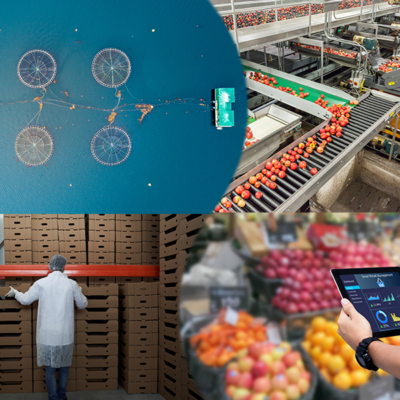
Fortunately for food processors, flexible packaging is dense and travels well across long distances, does not require temperature control, is highly customizable and easily scalable. Furthermore, food processors in the meat, fruit and vegetable, or fish and seafood industries, can rely on local experienced flexible packaging manufacturers, like Bulldog Bag Ltd., to help bridge the gap from ideation to commercialization. On this point our Sales Director mentions that “In our experience each product group has decades of convention with regards to packaging. A kind of middle ground that’s reached between production capability and consumer preference for packaging formats. We see this in fresh fruit and vegetables where light laminate handled bags and pouches are primarily used, we see it in the preference for high performance frozen food film that reliably seals under production conditions, in lidding film for tray packaged soft fruit or vegetables, and vacuum seal bags for frozen meat and seafood.”
“We are fortunate to have a great team who’s lived through the iterations of these packaging conventions, and we have a unique set of talents, and operational setup that allows us to quickly respond to customer demands.”
The National Food Security Strategy marks a potential shift in the Canadian Food and Agri industries. The ambitions are clear, the rational is clear, but it’s yet to be seen if there’s the entrepreneurial appetite to fill the gaps in food processing. As the strategy itself mentions, much of Canada’s domestic consumption is being satisfied by domestic processing, meaning local competition is tight and new entrants will either have to fight established and highly consolidated incumbents, or look for external markets. Fortunately, new entrants will have the benefit of a well developed and responsive flexible packaging supplier in Bulldog Bag Ltd.